Categories
Blog

Tooth Pain at Night Causes Quick Relief and When to See a Dentist

Quick Summary 

Tooth pain at night can feel more intense due to increased pressure and quiet surroundings, making it hard to sleep. This guide explains the common causes of nighttime toothaches, simple ways to get quick relief, and clear signs that tell you when it’s time to see a dentist. Understanding these points can help you manage the pain better and take the right steps for proper treatment. 

Why Tooth Pain at Night Feels Worse and What You Can Do 

It is late at night. You are tired and ready to sleep.
Then a tooth starts to hurt. 

The pain feels stronger in the quiet. You keep turning in bed, hoping it will stop. But it does not. 

Tooth pain at night is very common. It can feel worse than it does during the day. The good part is that there are simple ways to ease the pain for now. There are also clear signs that tell you when it is time to see a dentist. 

This guide will help you understand what is happening and what you can do next. 

Why Tooth Pain Feels Worse at Night 

Many people notice that their tooth hurts more at night. This does not always mean the problem got worse. It often feels stronger because of how your body works. 

When you lie down, more blood flows to your head. This can increase pressure inside the tooth. If there is already a problem, that pressure can make the pain feel sharper. 

At night, there are fewer distractions. During the day, your mind stays busy. At night, everything is quiet, so you notice the pain more. 

Inflammation can also feel stronger when your body is at rest. 

Simple takeaway: 

  • The pain is not new 
  • It is just more noticeable at night 

Common Causes of Tooth Pain at Night 

Tooth pain can come from different reasons. Some are simple. Some need quick care. 

Here are the most common causes: 

  • Tooth decay or cavities 
  • A cracked or damaged tooth 
  • Food stuck between teeth 
  • Sinus pressure affecting upper teeth 

Pain can feel different depending on the cause. It may be dull, sharp, or throbbing. It may come and go or stay constant. 

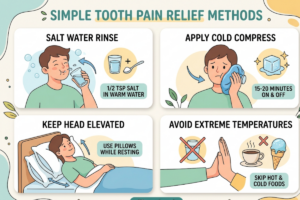
Quick Relief You Can Try Right Now 

When pain starts at night, you need simple relief. These steps can help you feel better for a while. 

They do not fix the cause, but they can help you get through the night. 

Simple ways to ease tooth pain 

What you can do  How it helps 
Rinse with warm salt water  Helps clean the area and reduce irritation 
Use a cold compress  Can reduce swelling and numb the pain 
Keep your head slightly raised  Reduces pressure in the tooth 
Take pain relief as directed  Helps manage discomfort temporarily 
Avoid very hot, cold, or sweet foods  Prevents triggering the pain 

Keep this in mind: 

  • Try to stay calm 
  • Avoid touching the painful area too much 
  • Give your tooth some rest 

fine smile dental

What Not to Do When You Have Tooth Pain 

When you are in pain, it is easy to try anything that feels like relief. But some actions can make things worse. 

Common mistakes to avoid 

What to avoid  Why it can make things worse 
Ignoring the pain for many days  The problem may get more serious 
Applying heat to the area  Can increase swelling 
Chewing hard foods on that side  Can damage the tooth further 
Using only home remedies for too long  Does not treat the real cause 

A simple rule: 

  • Short-term relief is fine 
  • Long-term delay is not 

When Should You See a Dentist 

Some tooth pain goes away quickly. But many times, it is a sign that something needs treatment. 

You should see a dentist if you notice: 

  • Pain that lasts more than one or two days 
  • Pain that keeps waking you up at night 
  • Swelling in your gums, face, or jaw 
  • Sensitivity that keeps getting worse 
  • Pain when biting or chewing 

These signs mean your tooth needs attention. Getting help early can make treatment easier and more comfortable. 

Experiencing Tooth Pain in Addison, TX?

Same-day appointments available — don’t wait until it gets worse.

A Quick Look at Symptoms and Possible Causes 

Understanding your symptoms can help you decide your next step. This table gives a simple idea. 

Symptom  Possible cause 
Sharp pain when biting  Cracked or damaged tooth 
Constant throbbing pain  Infection or decay 
Sensitivity to cold or sweet  Early cavity or enamel wear 
Pain in upper teeth  Sinus pressure 

This is only a guide. A proper dental check is needed to confirm the cause. 

Dentist Insight Why Early Care Matters 

Tooth pain rarely goes away on its own. In many cases, the issue slowly gets worse. 

A small cavity can grow deeper. Gum irritation can turn into infection. A minor crack can become more serious. 

Dentists often see that early treatment is simpler and more comfortable. It can also save time and cost later. 

What dentists want you to know: 

  • Pain is a warning sign 
  • Early care is easier 
  • Waiting can make things more complex 

What This Means for You 

Tooth pain at night can feel stressful. But understanding it helps you stay in control. 

Here are the key takeaways: 

  • Pain feels worse at night due to pressure and quiet surroundings 
  • You can manage discomfort for a short time 
  • Pain is a signal, not something to ignore 
  • If it continues, it needs professional care 

You Do Not Have to Deal With Tooth Pain Alone 

Tooth pain can make even a normal night feel difficult. But you do not have to deal with it on your own. 

Simple steps can help you feel better for now. But the real relief comes from understanding and treating the cause. 

At FiNE SMiLE Dental, the focus is on patient comfort and clear care. Every patient is treated with attention and care so they feel at ease. 

If your tooth pain is not going away or keeps coming back at night, it is time to take the next step. 

Schedule a visit with FiNE SMiLE Dental and get the right care to feel comfortable again. 

Frequently Asked Questions 

  1. Why does my tooth hurt more at night?

Tooth pain can feel worse at night because you are lying down. This increases blood flow to the head and can put more pressure on the tooth. Also, there are fewer distractions at night, so you notice the pain more. 

  1. How can I stop tooth pain quickly at night?

You can try rinsing your mouth with warm salt water, using a cold compress on your cheek, and keeping your head slightly raised. Pain relief medicine can also help if taken as directed. These steps can ease the pain for a short time. 

  1. Can a toothache go away on its own?

Some mild tooth pain may go away, especially if it is caused by something like food stuck between teeth. However, most toothaches are a sign of a problem that needs treatment. If the pain stays, it is best to see a dentist. 

  1. Is it okay to sleep with a toothache?

You can try to sleep, but it may be difficult if the pain is strong. Keeping your head raised and avoiding pressure on the painful side may help you rest a little better. 

  1. When should I worry about tooth pain?

You should be concerned if the pain lasts more than one or two days, gets worse, or comes with swelling, fever, or trouble chewing. These signs mean you should see a dentist as soon as possible. 

  1. What foods should I avoid if I have tooth pain?

It is best to avoid very hot, cold, sweet, or hard foods. These can trigger or increase the pain. Stick to soft and mild foods until you can see a dentist. 

  1. Can teethgrindingcause night tooth pain? 

Yes, grinding your teeth at night can cause pain or soreness. It puts pressure on your teeth and jaw, which can lead to discomfort when you wake up or during the night. 

  1. Why does my tooth hurt when I lie down?

When you lie down, more blood flows to your head. This can increase pressure inside the tooth, especially if there is inflammation or infection. That is why the pain can feel stronger. 

  1. Can I use home remedies for tooth pain?

Home remedies can help reduce pain for a short time. But they do not treat the cause of the problem. If the pain continues, you should visit a dentist for proper care. 

  1. Where should I go if my tooth pain does not stop?

If your tooth pain does not improve or keeps coming back, you should visit a dentist. At FiNE SMiLE Dental, you can get a proper checkup and the right treatment to relieve your pain and protect your teeth. 

Categories
Blog Cosmetic Dental Treatments root canal

Top 7 Signs You Need a Root Canal (And How to Avoid Severe Tooth Pain)

Most people tend to ignore a nagging toothache, hoping it will go away on its own. The truth is, your tooth does not lie. When the inner tissue of a tooth becomes infected or inflamed, the pain it creates is one of nature’s most persistent warning systems. Knowing the signs you need a root canal early can mean the difference between saving your natural tooth and losing it entirely.

According to the American Association of Endodontists, more than 41,000 root canal procedures are performed every single day in the United States. The procedure has a success rate of over 95 percent when performed in time. Yet many patients delay treatment simply because they do not recognise the warning signs soon enough.

This guide combines clinical insight with the most current information to help you understand exactly what those signs look like, what the procedure involves, and what you can do to protect your smile.

What Is a Root Canal? A Quick Overview

Inside every tooth, beneath the hard enamel and dentin layers, lies a soft tissue called the pulp. This pulp contains nerves, blood vessels, and connective tissue. When bacteria enter through a deep cavity, a crack, or physical trauma, the pulp can become infected and inflamed. This is what causes the severe, throbbing pain many patients associate with dental emergencies.

Root canal treatment is a three-step procedure that involves:

  • Removing the infected or inflamed pulp
  • Carefully cleaning and disinfecting the inside of the tooth
  • Filling and sealing the space to prevent re-infection

The goal is to save your natural tooth, preserve your bite alignment, and stop the infection from spreading to adjacent teeth or the jawbone. Modern anaesthesia and techniques have made the procedure far more comfortable than the reputation it carries. As one Etobicoke-based dental practice puts it, a root canal is not the cause of pain; it is the solution to it.

The 7 Warning Signs You Need a Root Canal

Recognising these signs early gives you the best chance of preserving your natural tooth and avoiding more complex, expensive treatment down the road.

dental care in Addison

Sign 1: Persistent, Severe Tooth Pain

This is the most definitive sign. A deep, throbbing, or continuous pain in one specific tooth that is significant enough to disrupt your daily activities is a red flag. Unlike a fleeting sensitivity, this pain may be constant or it may come and go, but it will not disappear with simple over-the-counter painkillers.

Pain that is particularly intense at night when you lie down is especially notable. The horizontal position increases blood pressure in the head, which can intensify pulp inflammation. If you find yourself unable to sleep because of a toothache, seek professional care immediately.

You can visit a root canal specialist in Addison, TX if you are in the Dallas area and experiencing this level of discomfort.

Sign 2: Extreme and Lingering Sensitivity to Hot and Cold

Many teeth experience brief sensitivity to temperature changes. What separates a healthy response from a sign of nerve damage is the duration. If a sip of hot coffee or a cold drink causes a sharp pain that lingers for more than a few seconds, or even several minutes after the stimulus is removed, the nerve inside the tooth is very likely compromised.

This lingering sensitivity, medically called dentinal hypersensitivity combined with pulp involvement, suggests the nerve tissue is damaged and may be beyond repair without intervention.

Sign 3: Pain When Biting Down or Applying Pressure

If a tooth becomes acutely painful when you bite down, chew food, or even touch it with your finger, this is a strong clinical indicator. This type of pressure-related pain usually means the infection has spread beyond the pulp itself and has begun affecting the ligaments and bone surrounding the root tip, a condition known as periapical periodontitis.

This is one of the signs that should prompt an urgent dental visit rather than a routine appointment.

Sign 4: A Small Pimple-Like Bump on the Gums

A recurring, small bump on the gum tissue near a painful tooth is known as a dental fistula (sometimes called a parulis or sinus tract). It forms because the infected pulp has created a pocket of pus that is trying to drain through the soft tissue.

The NHS describes this as a classic sign of a dental abscess, which itself is a direct consequence of untreated pulp infection. This is one of the most definitive and urgent warning signs on this list.

Sign 5: Swollen, Tender, or Puffy Gums

Even without a visible fistula, the gum tissue around an infected tooth often becomes visibly swollen, tender to the touch, or noticeably puffy. In more advanced cases, you may also notice swelling in the jaw or neck.

Important: Swelling that extends to the face, jaw, or neck can indicate that the infection is spreading and must be treated as a dental emergency. Do not wait for a scheduled appointment in this scenario.

Sign 6: Darkening or Discolouration of the Tooth

When the infection inside a tooth progresses, it can cut off the blood supply to the pulp, causing the inner tissue to die. As a result, the tooth itself can develop a grayish, dark yellow, or brownish discolouration. This happens from the inside out and is distinct from surface staining caused by coffee or tobacco.

This discolouration is a sign that the pulp has either died or is in the process of dying. Even if the tooth is not painful at this stage, it still requires endodontic treatment.

Sign 7: A Chipped, Cracked, or Deeply Damaged Tooth

A significant chip or crack in a tooth, whether from an injury, biting on hard food, or gradual wear, can create a direct pathway for bacteria to reach the pulp. If a damaged tooth is also causing you pain, sensitivity, or any of the other signs listed above, it is a very strong signal that the pulp has been compromised and needs immediate evaluation.

Patients in the Dallas area dealing with a cracked or fractured tooth can find more information at Addison Fine Smile Dental’s fractured tooth page.

Quick Reference: Signs at a Glance

Sign What It Feels Like Urgency Level
Persistent, severe tooth pain Deep, throbbing ache that disrupts sleep or daily routine High
Lingering hot/cold sensitivity Pain lasting more than a few seconds after stimulus removed Medium-High
Pain on biting or pressure Sharp pain when chewing, biting down, or touching the tooth High
Pimple-like bump on gums Small recurring bump near the affected tooth Very High
Swollen or tender gums Puffy, sore gum tissue around one tooth High
Tooth discolouration Grayish or dark colour change of the tooth Medium
Chipped or cracked tooth with pain Visible damage combined with any above symptoms Very High


How Painful Is a Root Canal? The Truth Behind the Myth

Root canal treatment has an undeserved reputation for being an extremely painful procedure. This association comes from an era before modern anaesthesia and endodontic techniques. Today, the reality is quite different.

The procedure is performed under effective local anaesthesia, which means you will not feel any pain during the treatment. Most patients report that the experience feels similar to having a large filling placed. The purpose of a root canal is to relieve the severe pain caused by the infection, not to cause it.

Any mild discomfort in the days following the procedure is typically manageable with routine over-the-counter pain medications and generally resolves within a week.

Root Canal Recovery: What to Expect

Proper aftercare after root canal treatment is straightforward and essential for optimal healing. The following table summarises the key recovery guidelines:

Recovery Phase What To Do
First 24 hours Avoid chewing on the treated side; take prescribed or recommended pain medication as directed
First week Eat soft foods; maintain good oral hygiene while being gentle around the treated area
Ongoing Attend all follow-up appointments; avoid hard or sticky foods until permanent restoration is placed
Long term In most cases a dental crown is placed over the tooth to protect it from fracturing and restore full function


Most patients return to normal activities within one to two days. Complete healing of the surrounding tissue may take several weeks. Learn more about general dental care options in Addison, Texas to understand the full scope of restorative options available.

What Happens If You Ignore the Signs?

One of the most important facts to understand about a tooth infection is that it does not go away on its own. Without treatment, the infection will worsen over time. The consequences of delaying care can include:

  • Formation of a painful dental abscess
  • Destruction of the bone surrounding the tooth root
  • Spread of infection to adjacent teeth
  • In serious cases, spread of infection to the jaw, neck, or beyond
  • Eventual loss of the tooth, requiring extraction and replacement with a dental implant or bridge

The American Dental Association consistently emphasises that preserving natural teeth is always the preferred clinical outcome. No implant or prosthetic, however advanced, fully replicates the function of your natural tooth.

If you are already experiencing dental pain in the Dallas area, the emergency dental team at Addison Fine Smile Dental provides urgent care for severe toothaches, abscesses, and related emergencies.

Experiencing Tooth Pain in Addison, TX?

Same-day appointments available — don’t wait until it gets worse.

How to Reduce Your Risk

While not every root canal is preventable, particularly those resulting from accidents or trauma, good oral hygiene significantly reduces the likelihood of reaching the point where one is needed.

  • Brush twice daily with a fluoride toothpaste, ensuring you clean all tooth surfaces including the gumline
  • Floss daily to remove plaque and food debris from between teeth where a toothbrush cannot reach
  • Attend regular dental checkups every six months; early cavity detection prevents the deep decay that allows bacteria to reach the pulp
  • Address cracks and chips promptly before bacteria have a chance to invade the pulp tissue
  • Wear a mouthguard during contact sports to protect teeth from trauma

You can also explore teeth cleaning and preventive care services in Addison to build a consistent preventive routine.

Final Thoughts

Your teeth communicate clearly when something is wrong. Persistent pain, lingering sensitivity, gum swelling, and visible discolouration are not symptoms to push through or ignore. They are direct signals from your body that the pulp inside a tooth is infected and needs professional attention.

Root canal treatment, when performed by a skilled endodontist or general dentist using modern techniques, is a comfortable, highly effective procedure with a success rate that is difficult to match. The real risk is not the treatment; it is the delay. If you have recognised one or more of the signs you need a root canal described in this guide, the best step you can take right now is to schedule an appointment and get a proper diagnosis.

For patients in the North Dallas area, the team at Addison Fine Smile Dental offers comprehensive endodontic, restorative, and cosmetic dental services in Addison, Texas. Early action today saves your natural smile for years to come.

Frequently Asked Questions

Is a root canal painful?

No. This is the most persistent misconception in dentistry. The procedure is performed under local anaesthesia and is designed to relieve pain, not cause it. Most patients compare it to a standard filling appointment.

How long does root canal treatment take?

Most root canals are completed in one or two appointments of approximately 60 to 90 minutes each, depending on the complexity of the case and the number of canals in the affected tooth.

Will I need a crown after a root canal?

In most cases, yes. After the procedure, the tooth can become more brittle over time. A dental crown is placed over the treated tooth to restore its full strength, function, and appearance and to protect it from fracturing under normal biting forces.

What if I ignore the signs?

Ignoring the symptoms allows the infection to progress. This can result in a painful abscess, bone loss around the root, and ultimately the loss of the tooth. Early treatment produces far better outcomes at a lower overall cost.