
Quick Summary
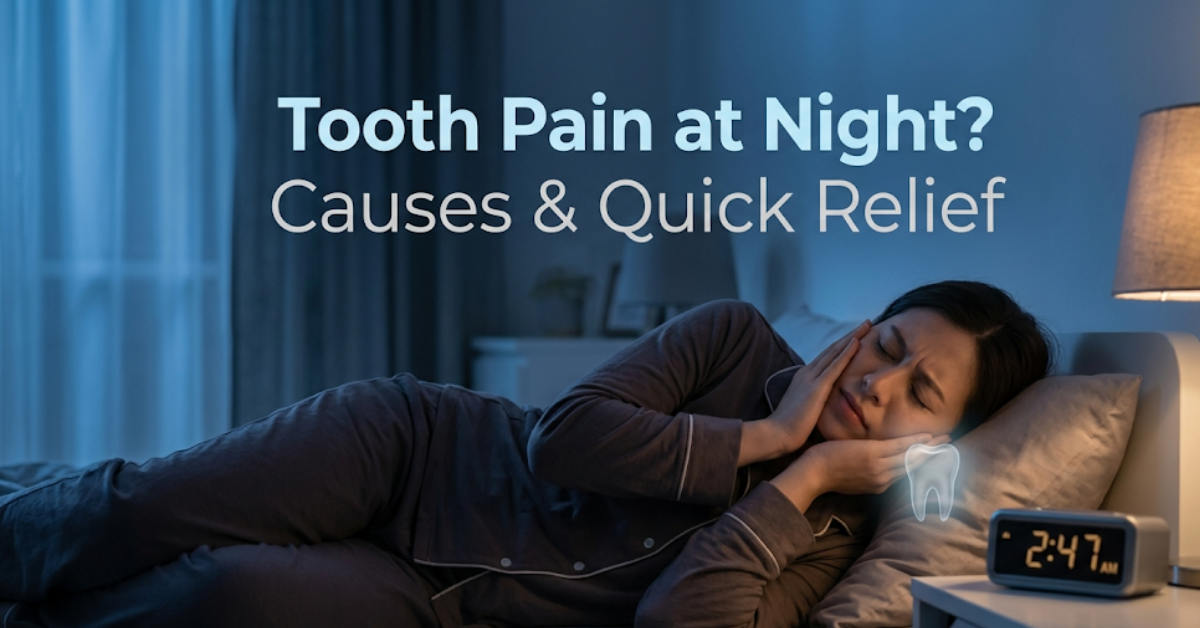
Tooth pain at night can feel more intense due to increased pressure and quiet surroundings, making it hard to sleep. This guide explains the common causes of nighttime toothaches, simple ways to get quick relief, and clear signs that tell you when it’s time to see a dentist. Understanding these points can help you manage the pain better and take the right steps for proper treatment.
Why Tooth Pain at Night Feels Worse and What You Can Do
It is late at night. You are tired and ready to sleep.
Then a tooth starts to hurt.
The pain feels stronger in the quiet. You keep turning in bed, hoping it will stop. But it does not.
Tooth pain at night is very common. It can feel worse than it does during the day. The good part is that there are simple ways to ease the pain for now. There are also clear signs that tell you when it is time to see a dentist.
This guide will help you understand what is happening and what you can do next.
Why Tooth Pain Feels Worse at Night
Many people notice that their tooth hurts more at night. This does not always mean the problem got worse. It often feels stronger because of how your body works.
When you lie down, more blood flows to your head. This can increase pressure inside the tooth. If there is already a problem, that pressure can make the pain feel sharper.
At night, there are fewer distractions. During the day, your mind stays busy. At night, everything is quiet, so you notice the pain more.
Inflammation can also feel stronger when your body is at rest.
Simple takeaway:
- The pain is not new
- It is just more noticeable at night
Common Causes of Tooth Pain at Night
Tooth pain can come from different reasons. Some are simple. Some need quick care.
Here are the most common causes:
- Tooth decay or cavities
- A cracked or damaged tooth
- Food stuck between teeth
- Sinus pressure affecting upper teeth
Pain can feel different depending on the cause. It may be dull, sharp, or throbbing. It may come and go or stay constant.
Quick Relief You Can Try Right Now
When pain starts at night, you need simple relief. These steps can help you feel better for a while.
They do not fix the cause, but they can help you get through the night.
Simple ways to ease tooth pain
| What you can do | How it helps |
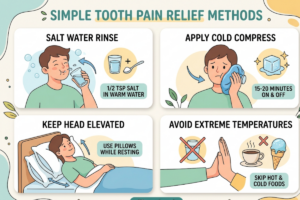
| Rinse with warm salt water | Helps clean the area and reduce irritation |
| Use a cold compress | Can reduce swelling and numb the pain |
| Keep your head slightly raised | Reduces pressure in the tooth |
| Take pain relief as directed | Helps manage discomfort temporarily |
| Avoid very hot, cold, or sweet foods | Prevents triggering the pain |
Keep this in mind:
- Try to stay calm
- Avoid touching the painful area too much
- Give your tooth some rest
What Not to Do When You Have Tooth Pain
When you are in pain, it is easy to try anything that feels like relief. But some actions can make things worse.
Common mistakes to avoid
| What to avoid | Why it can make things worse |
| Ignoring the pain for many days | The problem may get more serious |
| Applying heat to the area | Can increase swelling |
| Chewing hard foods on that side | Can damage the tooth further |
| Using only home remedies for too long | Does not treat the real cause |
A simple rule:
- Short-term relief is fine
- Long-term delay is not
When Should You See a Dentist
Some tooth pain goes away quickly. But many times, it is a sign that something needs treatment.
You should see a dentist if you notice:
- Pain that lasts more than one or two days
- Pain that keeps waking you up at night
- Swelling in your gums, face, or jaw
- Sensitivity that keeps getting worse
- Pain when biting or chewing
These signs mean your tooth needs attention. Getting help early can make treatment easier and more comfortable.
Experiencing Tooth Pain in Addison, TX?
Same-day appointments available — don’t wait until it gets worse.
A Quick Look at Symptoms and Possible Causes
Understanding your symptoms can help you decide your next step. This table gives a simple idea.
| Symptom | Possible cause |
| Sharp pain when biting | Cracked or damaged tooth |
| Constant throbbing pain | Infection or decay |
| Sensitivity to cold or sweet | Early cavity or enamel wear |
| Pain in upper teeth | Sinus pressure |
This is only a guide. A proper dental check is needed to confirm the cause.
Dentist Insight Why Early Care Matters
Tooth pain rarely goes away on its own. In many cases, the issue slowly gets worse.
A small cavity can grow deeper. Gum irritation can turn into infection. A minor crack can become more serious.
Dentists often see that early treatment is simpler and more comfortable. It can also save time and cost later.
What dentists want you to know:
- Pain is a warning sign
- Early care is easier
- Waiting can make things more complex
What This Means for You
Tooth pain at night can feel stressful. But understanding it helps you stay in control.
Here are the key takeaways:
- Pain feels worse at night due to pressure and quiet surroundings
- You can manage discomfort for a short time
- Pain is a signal, not something to ignore
- If it continues, it needs professional care
You Do Not Have to Deal With Tooth Pain Alone
Tooth pain can make even a normal night feel difficult. But you do not have to deal with it on your own.
Simple steps can help you feel better for now. But the real relief comes from understanding and treating the cause.
At FiNE SMiLE Dental, the focus is on patient comfort and clear care. Every patient is treated with attention and care so they feel at ease.
If your tooth pain is not going away or keeps coming back at night, it is time to take the next step.
Schedule a visit with FiNE SMiLE Dental and get the right care to feel comfortable again.
Frequently Asked Questions
-
Why does my tooth hurt more at night?
Tooth pain can feel worse at night because you are lying down. This increases blood flow to the head and can put more pressure on the tooth. Also, there are fewer distractions at night, so you notice the pain more.
-
How can I stop tooth pain quickly at night?
You can try rinsing your mouth with warm salt water, using a cold compress on your cheek, and keeping your head slightly raised. Pain relief medicine can also help if taken as directed. These steps can ease the pain for a short time.
-
Can a toothache go away on its own?
Some mild tooth pain may go away, especially if it is caused by something like food stuck between teeth. However, most toothaches are a sign of a problem that needs treatment. If the pain stays, it is best to see a dentist.
-
Is it okay to sleep with a toothache?
You can try to sleep, but it may be difficult if the pain is strong. Keeping your head raised and avoiding pressure on the painful side may help you rest a little better.
-
When should I worry about tooth pain?
You should be concerned if the pain lasts more than one or two days, gets worse, or comes with swelling, fever, or trouble chewing. These signs mean you should see a dentist as soon as possible.
-
What foods should I avoid if I have tooth pain?
It is best to avoid very hot, cold, sweet, or hard foods. These can trigger or increase the pain. Stick to soft and mild foods until you can see a dentist.
-
Can teethgrindingcause night tooth pain?
Yes, grinding your teeth at night can cause pain or soreness. It puts pressure on your teeth and jaw, which can lead to discomfort when you wake up or during the night.
-
Why does my tooth hurt when I lie down?
When you lie down, more blood flows to your head. This can increase pressure inside the tooth, especially if there is inflammation or infection. That is why the pain can feel stronger.
-
Can I use home remedies for tooth pain?
Home remedies can help reduce pain for a short time. But they do not treat the cause of the problem. If the pain continues, you should visit a dentist for proper care.
-
Where should I go if my tooth pain does not stop?
If your tooth pain does not improve or keeps coming back, you should visit a dentist. At FiNE SMiLE Dental, you can get a proper checkup and the right treatment to relieve your pain and protect your teeth.


